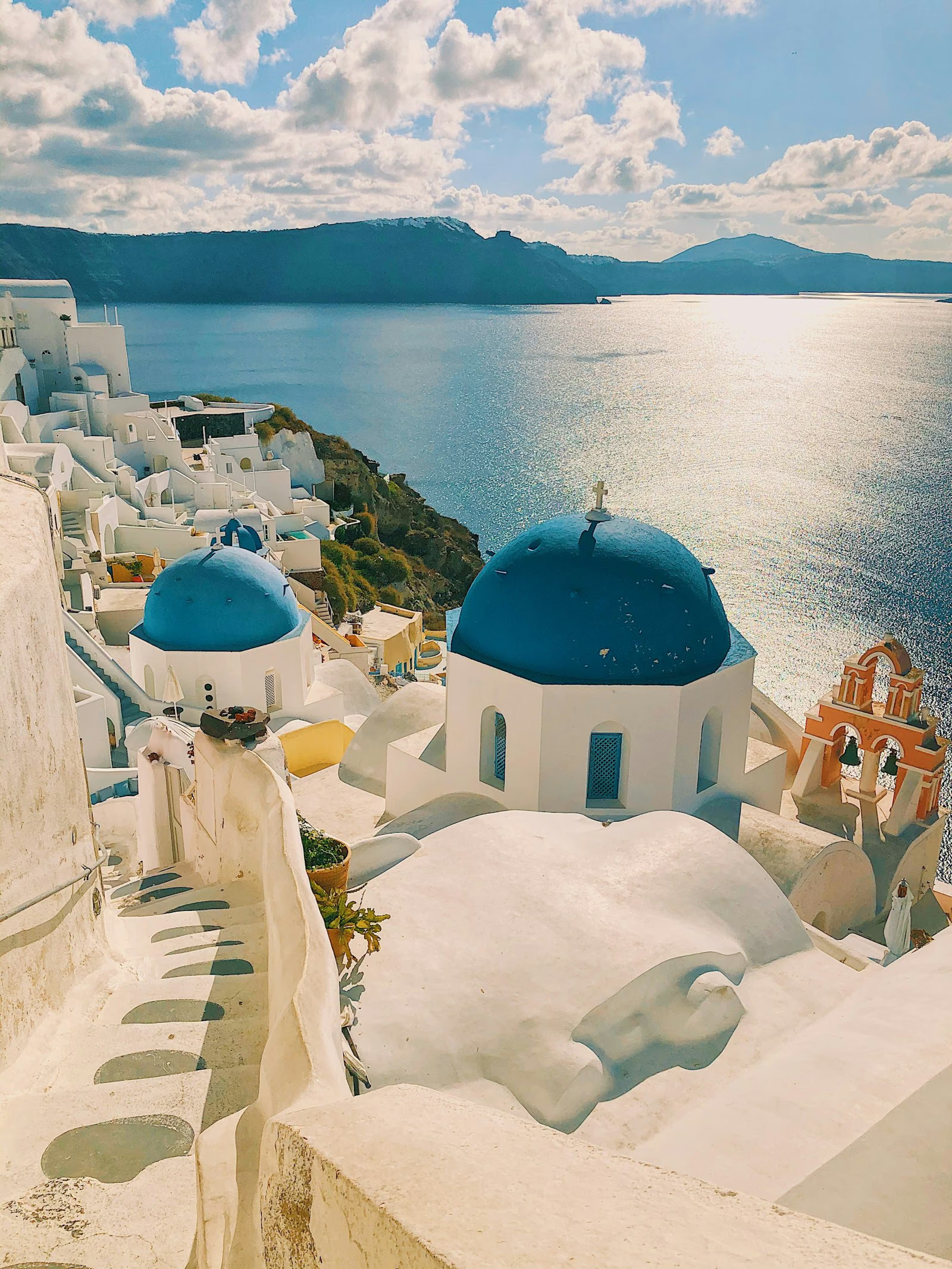
Santorini
“A postcard that has managed to remain a real place.”
- Signature
- Aegean summer
- Best for
- sunsets · honeymoons · wine
- Where
- Greece
- Peak months
- May · Jun · Jul · Aug
White cubes tumbling down a caldera, blue on blue.
Here's the thing about Santorini that nobody tells you until you're there: the island doesn't actually have a "bad" season, it just has seasons where you'll be sharing the caldera rim with 10,000 other people. The real question isn't whether to visit, but when you can tolerate crowds — because weather-wise, this place is basically perfect from May through August. The annual rainfall barely tops 278mm (less than most of California), and you're looking at roughly 10.9 hours of daylight per day on average. That's a lot of blue sky to work with.
May and June are the sweet spot if you can swing it. Highs hover around 24–26°C (75–79°F), the water's finally warm enough to swim without gasping, and the wildflowers are still hanging on in the hills. You'll see other tourists, sure, but not the wall-to-wall masses of July. June especially has this golden quality to the light in late afternoon — the kind that makes your phone photos actually look like the Instagram version. July and August are when Santorini becomes fully itself: whitewashed villages, packed tavernas, sunset viewpoints where you're basically standing shoulder-to-shoulder. Temperatures peak at 27–28°C (81–82°F), and while it's hot, it's a dry hot — you're not melting in humidity. If you go in August, expect to pay premium prices and book restaurants weeks ahead. The upside? The sea is warmest, the island has a proper festival buzz, and the light lasts until nearly 9pm.
September looks tempting on paper — fewer crowds, still warm — but it's genuinely a gamble. You might get another month of perfect weather, or you might hit the tail end of the summer heat dome and find some businesses already winding down for the season. October onward, the rains pick up (still modest by global standards), temperatures drop to around 20°C (68°F), and the island shifts into a quieter, moodier vibe. That's lovely if you're into moody, but the swimming season is basically over. Winter is mild but grey; spring (March–April) is when the island really wakes up, though it can still be unpredictable.
For 2026 specifically: Santorini's climate hasn't shifted dramatically over the past decade, so you can trust the historical patterns. May through August remain your safest bets. If you're flexible, May is genuinely the move — you get nearly identical weather to June but at a fraction of the chaos, and the island still feels like a place where locals outnumber tourists.
Santorini, four ways.
Every destination is really four destinations, worn by the seasons. Here — the four faces of the year in Santorini.
When to book, when to skip.
When Santorini is at its best
No months are especially difficult here.
Flight prices, month by month.
Estimated round-trip fares from London, based on a 7-day stay. Rule-of-thumb pricing — the cheapest windows tend to be the shoulder months, so a shift of a fortnight can pay for a hotel.
★ January looks like the cheapest month for flights to Santorini — often £76 less than the peak. Fares refresh daily; live prices below.
Book on WayAway →Twelve months, read them each.
Guides mentioning Santorini

Why September Is Europe's Best-Kept Travel Secret
September in Europe: warm sea, empty cities, museum peace, half the prices. A data-driven case for the best month to travel most Europeans already know about.

Santorini Weather: A Complete Month-by-Month 2026 Guide
11 complete years of Santorini climate data (2015–2025). Best months for sunsets, calderas, wineries, and honeymoons — plus honest shoulder-season advice.

5 Destinations That Are Cheaper — and Better — in Shoulder Season
Five popular destinations where shoulder-season pricing drops 40%+ and the weather actually improves. A data-driven case for the smart traveler.
Now, book Santorini.
You have the weather. You have the season. Only one thing left.