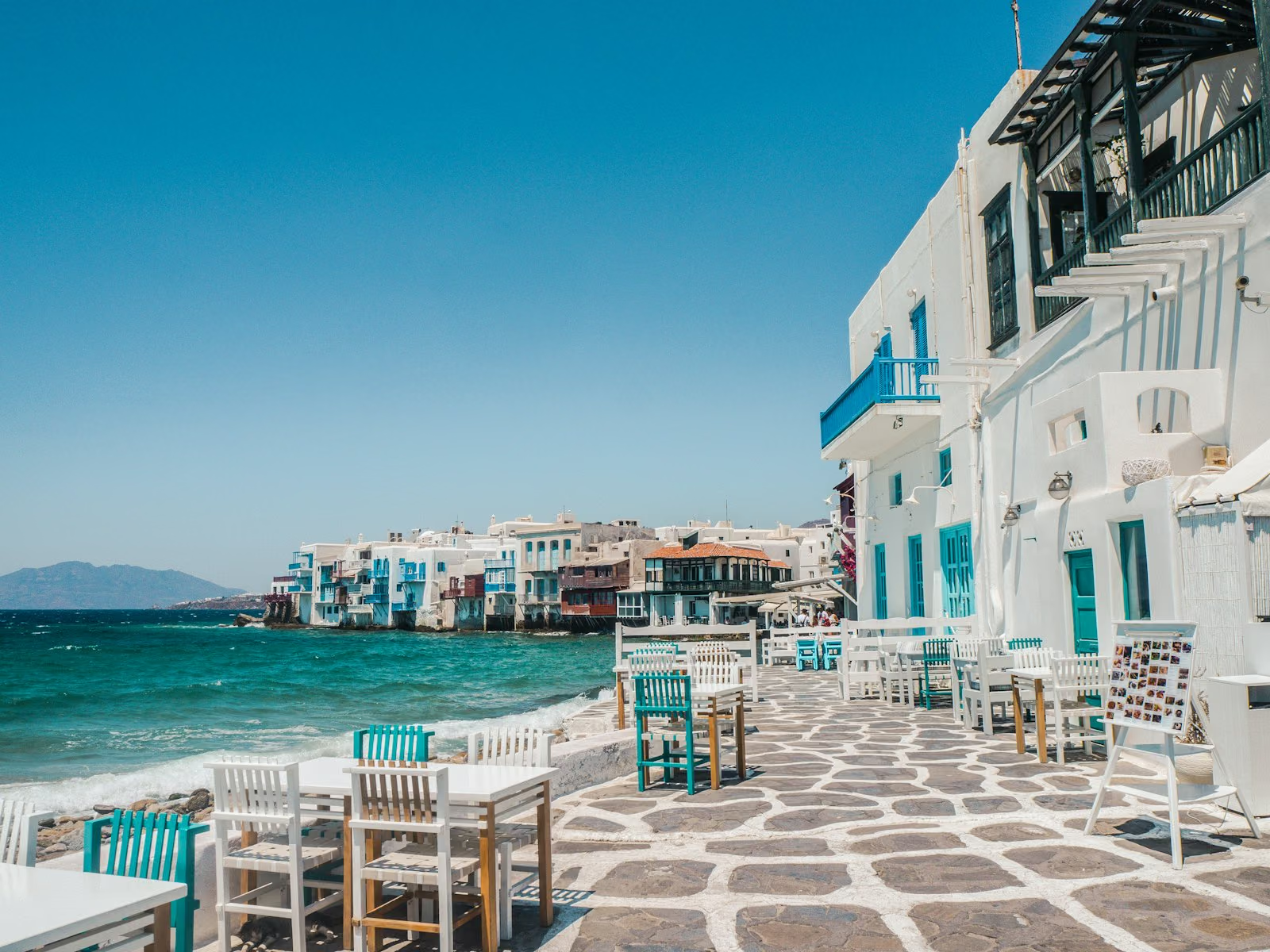
Visiting Crete in January
“Cool and moody. Best paired with warm rooms and long lunches.”
Roughly 17 rainy days across the month, on average.
The clocks tick into January and Crete leans into a raw chill that settles into stone; you feel it first around Heraklion's waterfront. Averages sit around 4.2°C (39.6°F) by day and -1.6°C (29.1°F) after dark, with rainfall near 158 mm across roughly 16.8 rainy days — a persistent presence that reshapes the pavements. Daylight runs about 7.4 hours per day, shorter daylight that concentrates walking hours, and the season stamps its signature on details like the pink sand of Elafonissi.
On the ground, cold shapes the timing. Time around Heraklion's waterfront shows best in mid-morning light before the chill deepens; warm interiors — cafés, museums, shops near mountain villages — carry the middle of the day. Evenings run short outdoors and long indoors, which suits the local rhythm rather than fighting it.
Reading across 11 complete years (2015–2025), January in Crete has trended less predictable in recent seasons, with the last few years pushing daytime highs and rainfall patterns modestly away from the older normals. The 2026 signal so far tracks the recent shape rather than the long-run midpoint — meaning what you see above is weighted to how this month has actually been running, not a smoothed 30-year picture that masks the shift.
For travellers planning around 2026, this profile is the honest baseline. Match the packing list to the numbers — not to the month name — and you avoid the classic mismatch of arriving with the wrong shell, the wrong shoes, or the wrong daylight assumptions. The rest of this page breaks down what to wear, what to do, and how the season tends to run for Crete visitors in 2026.
Skip Malia and Hersonissos party strips; real Crete lives in Chania old town, Rethymno backstreets, and mountain villages like Zaros or Argiroupoli. Dakos rusk salad with mizithra cheese is the true Cretan lunch. Raki (tsikoudia) is offered free after every meal; refusing is rude, sipping is fine. The Samaria Gorge is 16km downhill; buses drop at Omalos and boats pick you up at Agia Roumeli. Never drive to Balos; take the boat from Kissamos.
What to pack for Crete in January
With highs only near 4.2°C and lows around -1.6°C, cold-weather kit is non-negotiable, especially for long walking days. Waterproofing matters this month — expect meaningful rain and plan around it.
- a warm waterproof coat
- a jumper
- waterproof shoes
- an umbrella
- a scarf
What to pack for Crete in January
- →Merino wool base layerAmazon · shop this
- →Insulated puffer jacketAmazon · shop this
- →Thermal glovesAmazon · shop this
- →Packable rain jacketAmazon · shop this
- →Compact travel umbrellaAmazon · shop this
- →Waterproof dry bagAmazon · shop this
We may earn a small commission on any purchase — it doesn't change the price you pay.
Where to stay in Crete
We don't review individual hotels — plenty of people do that well. What we do is send you to compare rooms in Crete across trusted platforms.
Compare hotels on Booking.com→Estimated January trip to Crete
Off-season pricing — good value if the weather works for you. Rule-based estimates from a couple based in London — actual prices vary.
We may earn a commission if you book through these links, at no cost to you. Estimates use rule-based averages; check partner sites for live pricing.
Delayed flight to Crete?
Flights to Crete in January can be delayed by storms. Claim up to €600 if yours is 3+ hours late. EU regulations cover flights departing from or arriving in the EU/UK.
Check compensation eligibility →Free check · Only pay if you get paid · Powered by Compensair.
Plan your Crete trip
Handpicked services from partners we trust. One tab for everything you'll need after the flight is booked.
Compare rooms in Crete on Booking.com.
Skip-the-line tickets, day trips, food walks and guided tours.
Compare fares with cashback on every booking.
Instant data on arrival — no roaming charges, no SIM swap.
Flexible monthly coverage for trips of any length.
Compare 900+ rental brands with free cancellation.
Book a driver in advance — fixed price, no queue.
We may earn a commission if you book through these links, at no cost to you.
Things worth doing
Best-fit activities include harbour dinners, beach coves, mountain drives, and gorge hikes — a mix suited to the month's daylight and weather pattern.
January vs. the rest of the year
How this month compares in Crete. Tap any month to read more.
highlighted months are among the best time to visit.
Best time to visit Crete
While January has its own character in Crete, the data-backed best months to visit Crete are May, June, July, August. These months combine the most favourable temperatures, rainfall, and sunshine across an 11-year climate record (2015–2025).
See the full best-time-to-visit guide for CreteOther places with a similar climate right now


Read more about Crete
11 complete years of Santorini climate data (2015–2025). Best months for sunsets, calderas, wineries, and honeymoons — plus honest shoulder-season advice.
The best time to visit Greece depends on what you want — Cyclades sunsets, Athens history, or empty beaches. Data-driven verdict for 2026.
Crete in January — FAQ
Q01Is January a good time to visit Crete?
Is January a good time to visit Crete?
It is a challenging month — you may want to consider another time of year. In January, Crete averages a high of 4°C (40°F) and a low of -2°C (29°F), with 158mm of rainfall across roughly 17 rainy days. Late April into May when Samaria Gorge opens for the season, wild sage covers the Lasithi plateau, and Elafonisi pink sand isn't yet an August traffic jam.
Q02What is the average temperature in Crete in January?
What is the average temperature in Crete in January?
The average high temperature in Crete during January is 4°C (40°F), with an average low of -2°C (29°F). These figures are averaged from 11 complete years of daily records (2015–2025, Open-Meteo Archive). January snow on Psiloritis and White Mountains; Anogia mountain village becomes a raki-and-fireplace scene, and ferries to Piraeus cancel for meltemi.
Q03How many rainy days does Crete have in January?
How many rainy days does Crete have in January?
Crete averages approximately 17 rainy days in January, with a total monthly rainfall of about 158mm. This is based on daily precipitation records where days with 1mm or more of rain are counted as rainy days. November storms flood the Chania old harbor and shut the E75 highway near Georgioupoli; mountain villages lose power for days but always recover.
Q04What should I pack for Crete in January?
What should I pack for Crete in January?
For Crete in January, pack a warm winter coat, a merino base layer for evenings, a compact umbrella or waterproof jacket, comfortable walking shoes. These recommendations are based on 11 complete years of weather averages for this specific month. A dry bag for the Samaria Gorge finish; the swim at Agia Roumeli beach is mandatory after the 16km descent and boats don't wait for wet packs.
Q05How crowded is Crete in January?
How crowded is Crete in January?
Tourist crowds in Crete during January are typically low — winter is off-season, meaning quiet streets and better hotel deals. Consider this when planning accommodation — prices track crowd levels closely. Skip Malia and Hersonissos party strips; real Crete lives in Chania old town, Rethymno backstreets, and mountain villages like Zaros or Argiroupoli. Dakos rusk salad with mizithra cheese is the true Cretan lunch. Raki (tsikoudia) is offered free after every meal; refusing is rude, sipping is fine. The Samaria Gorge is 16km downhill; buses drop at Omalos and boats pick you up at Agia Roumeli. Never drive to Balos; take the boat from Kissamos.